Muffled hearing can impact every aspect of your life, leaving you feeling confused and disconnected from the world around you. Many people immediately worry they’re experiencing permanent hearing loss when, in reality, the culprit may be something much more basic: earwax buildup.
Distinguishing between a wax impaction and true hearing loss is crucial for identifying if you need a simple removal or a formal diagnostic exam. Try not to worry if your hearing feels abruptly diminished. While only a clinician can confirm the cause, understanding these key indicators of earwax vs. hearing loss can provide instant clarity.
Recognizing Cerumen Blockage Symptoms
Earwax is actually a healthy, natural substance intended to protect the ear canal from dust and foreign debris. The difficulty starts when this material collects to the level of a tangible blockage.
Symptoms of a clog often feature:
- Dampened sound clarity that occurs gradually or suddenly
- A sensation of ear pressure or a “clogged” feeling
- Localized tenderness or localized aching in the ear
- Persistent humming or ringing sounds
- Auditory sharpness that shifts or improves momentarily with chewing
Because blockages are physical, they commonly affect just one ear at a point rather than each uniformly. The positive aspect is that professional removal usually results in an instant return of your natural hearing levels.
How Auditory Loss Usually Manifests
Lasting hearing shifts, often caused by aging or loud environments, are progressive and remain even if the ear is perfectly clear.
Common indicators of clinical hearing impairment consist of:
- Battling to track discourse when ambient sound is present
- Often needing repetition during everyday dialogue
- Adjusting media levels to a level that people find too loud
- Difficulty hearing high-frequency sounds like birds or soft voices
- Bilateral hearing changes that affect both ear canals simultaneously
Unlike earwax buildup, hearing loss doesn’t typically induce a feeling of obstruction or pressure.
At-a-Glance: Earwax vs. Auditory Decline
Several fundamental signs can help you determine whether you are contending with a treatable obstruction or a more permanent shift:
- Timing: Blockages can feel sudden, while hearing loss is virtually always slow
- Permanence: Obstructions are a quick fix, while nerve loss requires long-term management
- Sensations: Physical “clogging” points to wax, while the struggle to clarify sounds points to impairment
- Ear Balance: Unilateral dull sound points to cerumen, while both sides point to hearing loss
Why You Shouldn’t Self-Diagnose
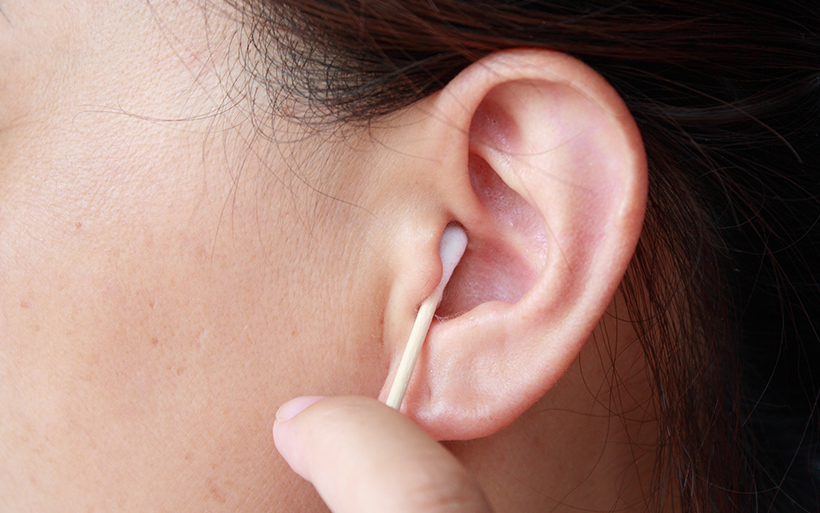
When hearing feels dampened, the instinctive urge is to use a cotton bud, but this is frequently a hazardous move. Using external items typically shoves the plug deeper into the canal, heightening the danger of trauma.
Based on data from the NLM, inserting items into the auditory canal increases the risk of impaction and injury.
On the other hand, assuming a problem is merely wax when it is actually auditory impairment can prevent you from getting the assistance you require to stay connected.
The Importance of a Clinical Otoscopy
A brief clinical exam is the primary way to confirm if wax is actually the source of your muffled hearing.
If cerumen is present, clinical extraction often resolves symptoms immediately.
If no wax is found, a formal audiogram will be conducted to identify the type and degree of any underlying loss.
Experts recommend an immediate auditory screening if you begin struggling to interact or navigate your environment.
Finding the Right Path for Better Hearing
Dampened hearing doesn’t necessarily indicate irreversible damage.
It is frequently the reality that a simple, treatable blockage is the root of the issue.
Our audiology team can help you to get to the root of dull auditory symptoms so you can proceed with confidence and tranquility.
In the end, an audiology consultation is the only certain way to differentiate between a temporary blockage and a permanent shift.
Finding answers promptly can avert pointless worry and ensure you obtain the right care at the optimal time.
If you’ve noticed a shift in your auditory ability, call our clinic for a formal assessment today.
