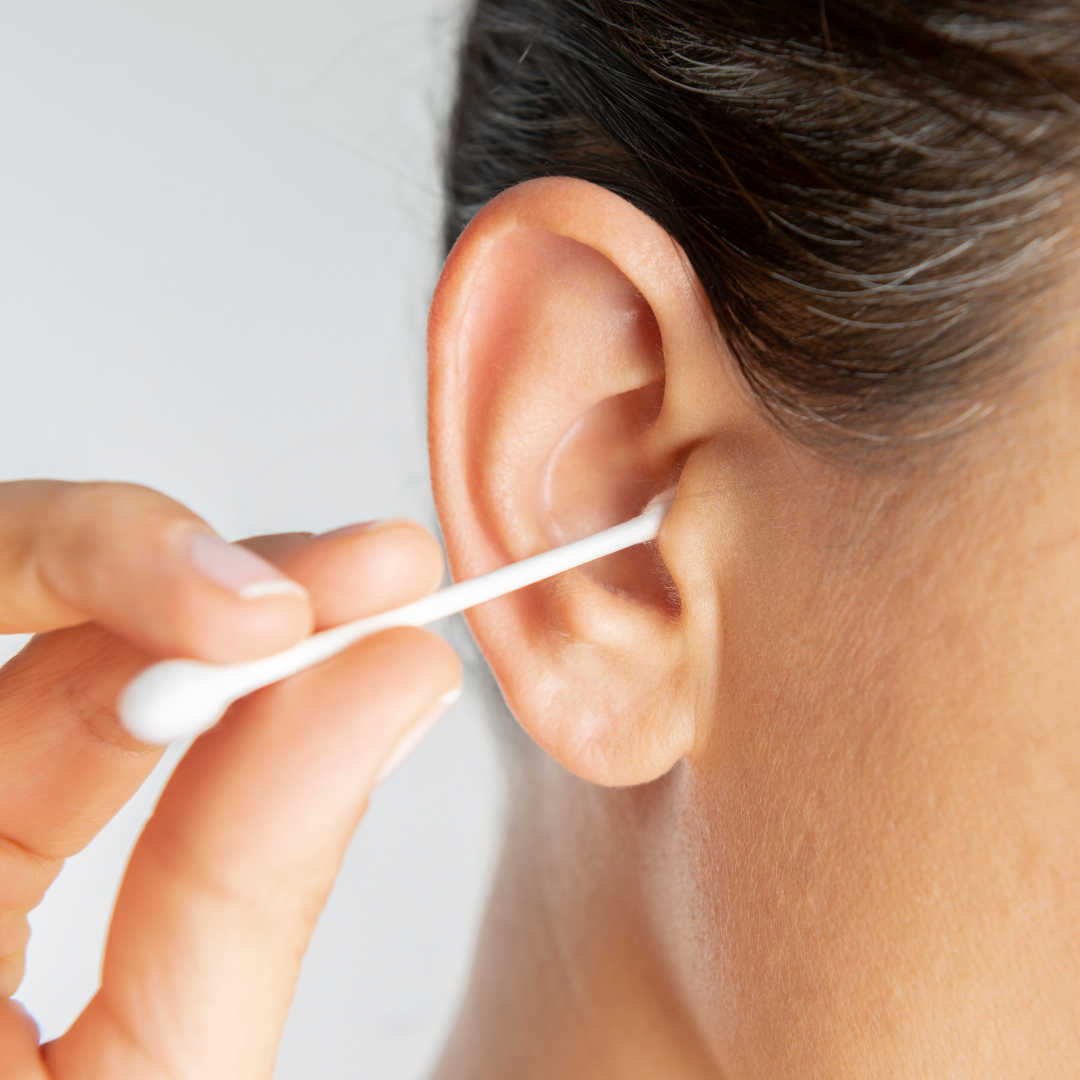
Even though cotton swabs seem practical for routine hygiene, probing the inner canal creates deeper impactions and threatens long-term ear health. We perform thorough examinations to verify if earwax removal is necessary and select appropriate procedures for your ear condition. Healthy ears rarely require aggressive manual intervention; nevertheless, when blockage develops, we assist patients in safely extracting excess cerumen.
Clinical Reasons Why Q-Tips Damage the Ear Canal
Biologically, earwax—known clinically as cerumen—is not an unhygienic waste product. Cerumen works to entrap airborne particles, deter infectious pathogens, hydrate the auditory canal, and protect thin dermal layers. Jaw movement and normal skin migration gradually carry old wax toward the ear opening, where it flakes away or washes off during bathing.
A Q-Tip placed inside the canal can disrupt this self-cleaning process. Although the cotton may collect a small amount of wax, it often pushes the remaining material closer to the eardrum. Ongoing cotton swab use regularly condenses wax into a solid obstruction, causing a congested feeling that drives repetitive cleaning attempts.
Cotton swabs may be used around the folds of the outer ear, but they should not enter the canal.
Potential Ear Damage and Complications from Q-Tips
The epidermal tissue coating the ear canal is thin and tears under minimal friction. Small abrasions can cause pain or bleeding and create an opening for bacteria, increasing the risk of an outer-ear infection. The cotton end can also dislodge from the applicator, creating a retained foreign body within the ear.
Documented injuries associated with cotton swabs include:
- Earwax pushed into a deeper impaction
- Localized scratches, severe irritation, tissue edema, or bleeding
- Pathogenic infection involving the ear canal
- A cotton tip or other material trapped in the ear
- A torn or perforated eardrum
- Dislocation or injury of the delicate hearing ossicles
- Temporary or permanent hearing changes
- Persistent tinnitus, balance instability, or severe otalgia
Though critical trauma is uncommon, an unexpected collision, a sudden slip, or overzealous penetration can cause extensive ear injury.
Determining the Proper Frequency for Earwax Removal
For the average individual, scheduled cerumen removal is completely unnecessary. Normal ears migrate cerumen toward the opening constantly, allowing routine bathing to cleanse the visible exterior. Overzealous hygiene parches canal tissue, incites chronic irritation, and increases vulnerability to bacterial infection or deep plugs.
Cerumen removal is indicated when buildup obstructs the canal, hinders tympanic membrane visualization, degrades hearing aid performance, or generates symptoms.
What Are Safe Ways to Remove Earwax At Home?
Whenever cerumen remains asymptomatic, avoiding manual intervention represents the safest course of action. Clean exclusively around the exterior auricle using a soft, moist cloth, letting the auditory canal clean itself naturally.
When wax needs softening, we may recommend an over-the-counter cerumen-removal product or drops containing ingredients such as mineral oil, glycerin, saline, or carbamide peroxide. Dispense only the directed amount and restrict use strictly to the timeframe specified on the product packaging. Discontinue the product right away if you encounter otalgia, severe dizziness, contact dermatitis, or aggravating symptoms.
Home flushing is contraindicated in many cases and should solely be conducted after an expert confirms safety and reviews proper methods. Absolutely avoid using high-velocity dental water jets inside your auditory canal. Avoid ear candles, metal scoops, camera-guided tools, hairpins, and home suction devices. These hazardous instruments often cause cutaneous burns, sharp cuts, eardrum ruptures, or compounded cerumen impaction.
Recognizing When Earwax Requires Clinical Intervention
Arrange a consultation when aural fullness continues after drop therapy, wax is severely impacted, or home interventions prove ineffective. Expert removal is the safest path for patients who struggle to hold still, individuals with narrow ear canals, hearing aid wearers, or those with surgical contraindications to irrigation.
Schedule an ear exam promptly if you experience:
- Severe ear pain, intractable itching, or outer ear tenderness
- Active bleeding, pus formation, clear exudate, or malodorous drainage
- Fever combined with visible swelling or redness around the ear
- Sudden-onset tinnitus or vestibular dizziness
- Rapid-onset hearing impairment or ongoing hearing deficits post-cleaning
- A possible eardrum perforation or cotton fragment trapped inside
- Repeated wax accumulation that impairs prescription hearing devices
Regard sudden unilateral hearing loss as a time-sensitive medical emergency instead of presuming it is earwax. Immediate assessment allows clinicians to differentiate an external canal obstruction from an urgent inner-ear pathology.
How Healthcare Providers Extract Impacted Earwax
The clinical process starts with high-magnification otoscopy or microscopy to establish cerumen presence and screen for infections, abrasions, or tympanic perforations. Choosing the safest clinical protocol relies on cerumen firmness, individual canal anatomy, medical records, otologic surgical history, and patient tolerance.
Expert removal procedures include:
- Medical-grade wax softeners administered prior to or during the procedure
- Regulated mechanical irrigation with body-temperature saline for sealed eardrums
- Gentle micro-suction performed under clear binocular visualization
- Mechanical extraction using sterile ear loops, specialized curettes, or micro-forceps
Direct visualization allows the clinician to work around sensitive canal skin and stop if discomfort occurs. Utilizing more than one removal technique may be necessary to resolve dry or severely compacted wax. Following the procedure, the ear is re-evaluated to guarantee that both the canal passage and eardrum are clear and healthy. If aural fullness, ear ringing, dizziness, or auditory impairment remains after cleaning, further diagnostic evaluations can identify the root issue.
Arrange Safe In-Office Earwax Removal
If you notice a blocked sensation or changes in auditory clarity, contact us for an evaluation rather than inserting a Q-Tip. Your appointment can include a review of symptoms, previous ear procedures, hearing aid use, home treatments, and factors that may increase wax buildup. Contact our office directly to book your safe cerumen-removal appointment.
