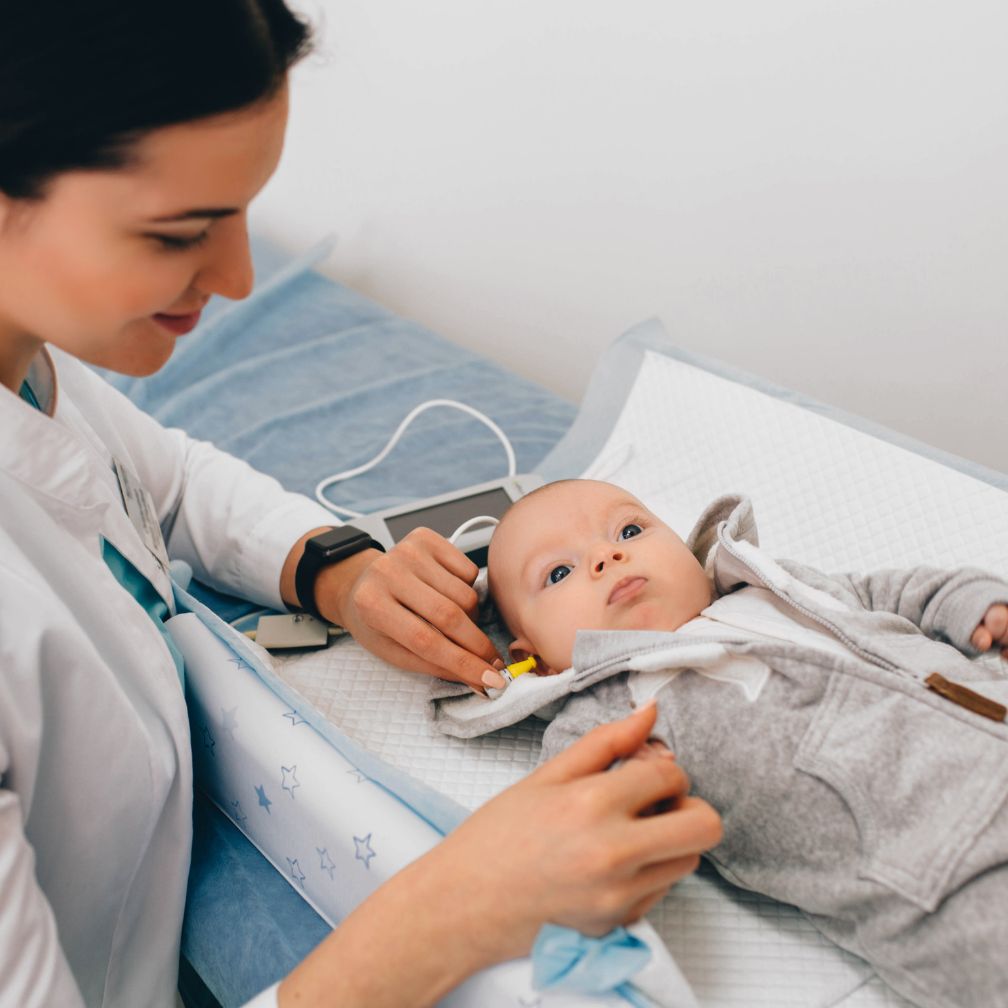
For new parents, discovering that their infant experiences auditory deficits routinely triggers immense shock and distress. Yet the positive perspective remains that via early care and screening, infants experiencing hearing loss can genuinely flourish remarkably. Without question, these babies can construct speech patterns, relational abilities, and robust connections with their society, realizing a wonderful life!
Two of the primary supportive devices for supporting infants with hearing loss consist of pediatric hearing aids and cochlear implants. Below, our guide evaluates their functional parameters so you can determine the most suitable choice for your baby.
Grasping the Basics of Pediatric Hearing Loss
Hearing impairment in newborn infants can stem from several potential sources, including:
- Potential genetic predispositions (even while lacking documented familial lineage)
- Early prenatal viral exposures including cytomegalovirus (CMV) or rubella pathogens
- Critical labor complications, such as perinatal hypoxia or early delivery
- Particular pharmaceutical treatments deployed inside specialized newborn intensive units
What stage carries the most weight? Swift medical diagnosis. Owing to this mandate, babies across the United States undergo mandatory hearing screening prior to hospital discharge. Prominent pediatric hearing specialists implement the industry-standard “1-3-6” target timetable:
- Early auditory screening conducted within 30 days post-birth
- Official hearing diagnosis confirmed prior to 3 months post-birth
- Comprehensive management (employing modern technology or rehabilitation) started within 180 days of life
Reaching these structural checkpoints secures for infants an optimal path toward speech acquisition, language mastery, and cognitive growth. Should you seek further counsel regarding these testing procedures, your personal pediatrician stands eager to help!
Hearing Aids for Infants
For babies with mild to severe hearing loss, wearable hearing aids routinely serve as the primary therapeutic intervention. These miniature, body-worn units boost ambient audio signals, allowing infants to hear human speech and background noise much more clearly.
Primary hearing aids remain:
- Completely safe for application in newborns only several weeks old
- Constructed using soft, non-irritating ear inserts that adapt during early physical development
- Furnished with secure battery housing closures and specialized pediatric safety components
- Individually programmed by a dedicated pediatric audiologist to align with your child’s hearing needs
As your baby grows, their wearable units necessitate ongoing recalibration to secure accurate fit and optimal therapeutic benefit.
Cochlear Implant Options for Newborns
In instances where an infant demonstrates severe to profound sensorineural hearing loss while showing insufficient progress with hearing aids, audiology teams frequently suggest a cochlear implant. In distinction from standard acoustic hearing devices, cochlear technology:
- Demand a dedicated surgical procedure for placement to enable direct neural stimulation
- Bypass damaged parts of the inner ear
- Translate ambient audio into precise electrical impulses that deliver signals directly to the acoustic nerve
Specialized pediatric cochlear implants act as:
- Fully approved by the FDA for pediatric patients as young as 9 to 12 months
- Most beneficial when paired with early intervention and consistent family engagement
- Advised exclusively after a complete clinical review by an audiologist and ENT specialist
That pre-surgical path incorporates diagnostic imaging, objective hearing assessments, and open dialogue concerning long-term communicative results.
Hearing Aids Versus Cochlear Implants: A Direct Comparison
- Mild to severe hearing loss targets Hearing Aids; Severe to profound auditory destruction warrants Cochlear Implants
- Non-Invasive acoustic positioning: Hearing Aids; Invasive surgical placement: Cochlear Implants
- Standard sound amplification logic: Hearing Aids; Electrical signal stimulation conversion: Cochlear Implants
- Treatment starts in newborn infancy: Hearing Aids; Placement starts at 9-12 months: Cochlear Implants
Hearing Aids vs. Cochlear Implants: Final Thoughts
If your baby has been diagnosed with hearing loss, you possess multiple viable options and compassionate guidance. Thanks to collaboration with dedicated pediatric audiologists, numerous children grow to master communication skills that mirror those of their age group.
Irrespective of whether your child receives fitting for hearing aids or surgery for cochlear devices, taking immediate action produces a lifelong positive impact.
Have questions about your baby’s hearing health? Connect with our office today to receive a complete diagnostic assessment and personalized rehabilitation plan.
